
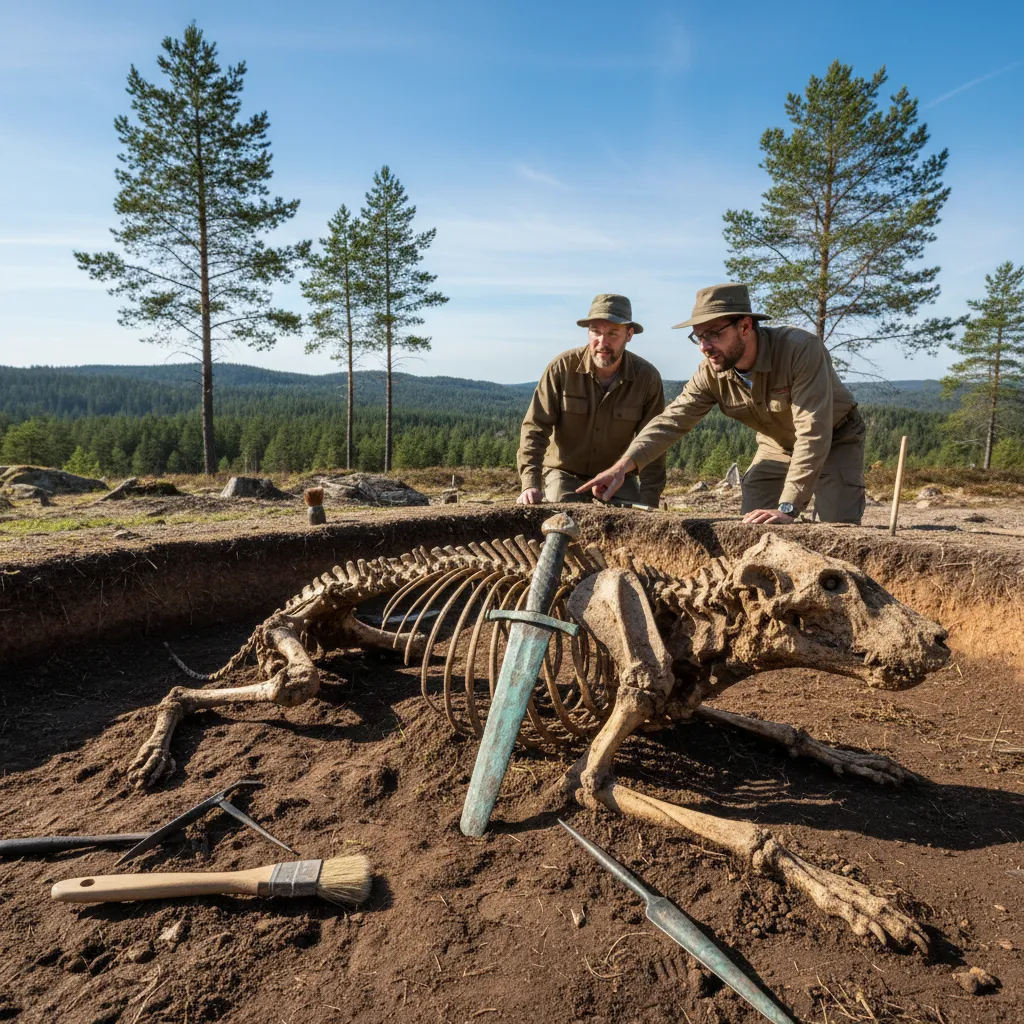
Sweden has recently uncovered a remarkable archaeological find, shedding light on ancient burial practices. A well-preserved dog, believed to be around 5,000 years old, was discovered buried alongside a dagger, pointing to the animal's elite status in prehistoric society.
Ancient Burial Practices
The discovery was made in Blekinge County, Southern Sweden, a site well-known for its rich archaeological history. This intriguing find suggests that the dog was an esteemed companion, possibly revered by its human counterparts. The presence of the dagger, intricately crafted, indicates that the dog might have been part of a ritualistic burial, a practice that was common among elite members of society during that era.
Significance of the Dagger
The dagger found with the dog is not just an ordinary tool. Its design and craftsmanship reflect the technological capabilities of the time, illustrating the importance of the dog-owner relationship. Such artifacts provide insights into the ceremonial aspects of prehistoric life, where animals were often seen as more than just companions.
Insights into Prehistoric Society
This discovery adds a new dimension to our understanding of ancient human-animal relationships. It suggests that dogs were not only valued for their companionship but also played a significant role in social and cultural practices. The burial site itself may have been a place of significance, used for honoring prominent individuals and their esteemed animals.
Archaeological Techniques Utilized
Modern archaeological methods were employed to carefully excavate the site, ensuring the preservation of both the canine remains and the accompanying artifacts. These techniques allow researchers to piece together historical narratives, providing a clearer picture of life thousands of years ago. Advances in technology, such as carbon dating, further assist in accurately determining the age of such finds.
Implications for Future Research
Findings like this open up new avenues for research, prompting questions about the role of animals in ancient societies. Scholars can now explore the extent of ritualistic practices involving animals and how these practices evolved over time. This discovery also encourages a re-examination of other archaeological sites for similar patterns in burial practices.
Conclusion
The unearthing of a 5,000-year-old dog with a dagger in Sweden is a testament to the intricate bond between humans and animals in ancient times. It highlights the dog's elevated status and offers a glimpse into the ceremonial practices of prehistoric societies. Such discoveries continue to enrich our understanding of the past and inspire ongoing archaeological exploration.