Understanding Your Cat's Unique Hydration Needs
As summer temperatures rise, pet owners face an often-overlooked challenge: keeping indoor cats properly hydrated. According to reports, cats naturally have a low thirst drive, creating a potential health concern that many pet owners don't realize exists.
In the wild, cats derive their hydration primarily from their prey, but indoor cats don't have this natural advantage. This fundamental difference means domestic cats require special attention to their water intake, especially during hot months when dehydration risks increase.
The Hidden Health Risks
Summer heat poses serious dehydration risks for indoor cats that can lead to urinary tract issues and other health problems. The combination of cats' naturally low thirst drive and the lack of prey-based water intake creates a perfect storm for potential health complications during warmer months.
Unlike dogs, who typically drink water readily, cats often don't consume adequate amounts of water on their own. This makes it crucial for cat owners to take proactive steps to encourage hydration.
Practical Hydration Strategies
Water Fountain Placement
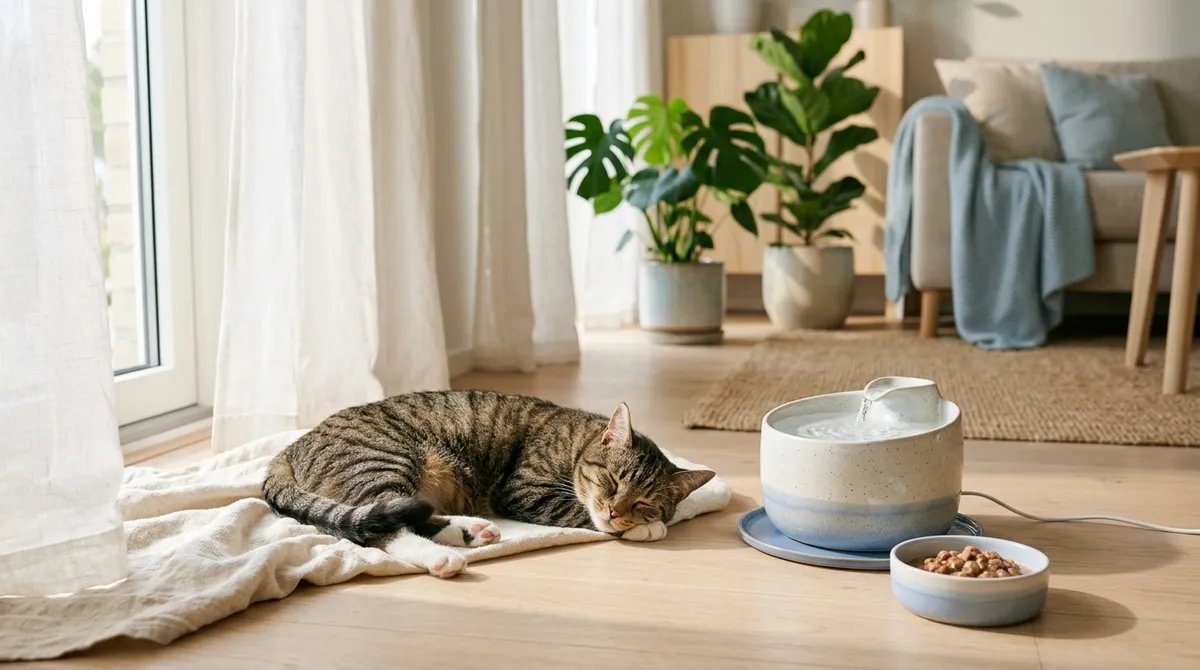
Strategic placement of water fountains can significantly improve your cat's water consumption. According to reports, working with cats' instincts rather than against them is key to successful hydration strategies. Consider placing multiple water sources throughout your home to make drinking more convenient and appealing.
Wet Food Strategies
Incorporating wet food into your cat's diet provides an excellent source of additional moisture. This approach mimics the natural hydration cats would receive from prey in the wild, making it an effective way to supplement their water intake during summer months.
Creating Cooling Stations
Establishing dedicated cooling stations around your home can encourage cats to spend time in areas where fresh water is readily available. These stations can include elevated water bowls, cooling mats, and shaded areas that naturally attract cats during hot weather.
Working With Natural Instincts
The most effective hydration strategies work with cats' natural behaviors rather than fighting against them. Reports indicate that understanding cats' instinctual preferences for fresh, moving water can help owners create more appealing drinking opportunities.
Many cats prefer running water over still water, which explains why some felines are drawn to dripping faucets or prefer drinking from the bathroom sink. Incorporating this preference into your hydration strategy can significantly improve water consumption.
Recognizing Dehydration Warning Signs
Cat owners should be aware of early warning signs of dehydration, which can develop quickly during hot weather. While specific symptoms weren't detailed in available reports, the emphasis on preventing urinary tract issues and other health problems highlights the importance of maintaining proper hydration levels.
Creating an Effective Hydration Setup
Transforming your cat's hydration setup involves more than simply providing a water bowl. According to reports, this often-overlooked aspect of pet care requires specific strategies that address the unique challenges indoor cats face.
Consider implementing multiple approaches simultaneously: combining wet food with strategically placed water sources, ensuring water stays fresh and clean, and creating appealing drinking environments that encourage regular water consumption.
Prevention Is Key
The emphasis on proactive hydration strategies underscores an important point: many pet owners don't realize they have a hydration problem until health issues develop. By implementing these strategies before problems arise, cat owners can prevent serious health complications and ensure their felines stay healthy throughout the summer months.
Making Hydration a Priority
As temperatures continue to rise, making cat hydration a priority becomes increasingly important for indoor cat owners. The combination of environmental factors and cats' natural physiology creates unique challenges that require thoughtful solutions.
By understanding these challenges and implementing targeted strategies, cat owners can ensure their feline companions remain properly hydrated despite their naturally low thirst drive and the absence of prey-based water sources.